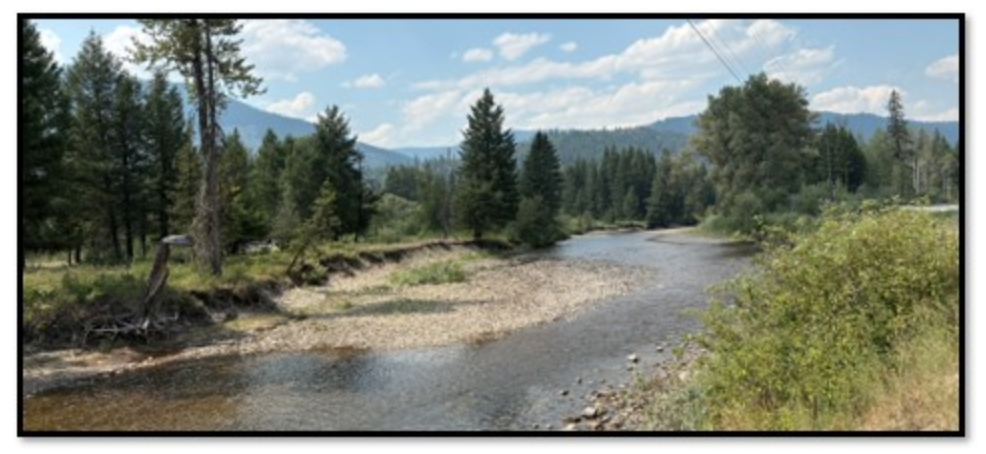
This special bulletin provides an update on drought conditions and water levels in the West Kettle watershed only
Overview
Streamflow in the West Kettle River is currently the lowest recorded for this time of year. Flows have reached levels that threaten the survival of fish populations, particularly Rainbow Trout, and may impair the long-term health of aquatic ecosystems throughout the watershed.
In response, the Ministry of Water, Land and Resource Stewardship is contacting licensed and approved water users in the watershed and encouraging them to reduce or cease water use wherever possible. These voluntary conservation efforts can help protect remaining streamflows and reduce impacts on fish and aquatic habitat during this critical period.
When water users and communities conserve water, more water remains in the river to support fish and ecosystem needs. Voluntary reductions in water use may also help delay or prevent the need for additional regulatory measures should drought conditions worsen. This includes wells, as surficial (shallow) aquifers directly contribute water to streams.
What are the current conditions in the West Kettle?
The Kettle watershed is currently at Drought Level 4. A warm winter and below-normal snowpack resulted in reduced spring runoff and lower-than-normal groundwater levels entering the summer season. Low precipitation through the spring and summer has not provided relief to streamflows, and the region is now entering what is typically the hottest and driest part of the year. Low flows reduce available habitat, concentrate fish into smaller areas, limit access to spawning and rearing habitats, and increase stress from elevated water temperatures and declining water quality (Figure 2). These low flows may threaten the survival of Rainbow Trout populations and may also adversely affect other fish species and aquatic life.Without significant rainfall or substantial reductions in water use, streamflows are expected to remain at critically low levels. Continued low flows may result in serious and potentially irreversible impacts on fish populations and the aquatic ecosystems that support them.
Figure 2: Hydrograph comparing 2026 West Kettle River flow at Westbridge with historical percentiles, historical median and previous year flows as of July 30, 2026
Figure 3: Map of the West Kettle Watershed, including Big White and the communities of Beaverdell, Westbridge, Carmi and Rhone. The blue square identifies Water Survey of Canada Hydrometric station 08NN003, just above the confluence with the Kettle River
What actions are being taken by the Province in the West Kettle watershed?
Because streamflow is at record low for this time of year, fish habitat is under stress across the West Kettle watershed. The Ministry of Water, Land and Resource Stewardship is sending letters to water users asking them to voluntarily use less water.If you hold a surface water or groundwater licence in the West Kettle watershed, you may receive a letter requesting water conservation efforts in the mail or by email.When licence holders cut back their water use in sensitive watersheds, it can have a considerable positive impact on streamflows. Individuals and communities can play a key role in delaying or even preventing the need for regulatory actions.If stream conditions keep getting worse with the hot, dry weather and current water demand, provincial government staff from the Ministry of Water, Land and Resource Stewardship may need to recommend stronger steps to protect fish and aquatic ecosystems, such as Temporary Protection Orders (TPOs). Visit the Water Use During Scarcity webpage about the tools the Province may use to address water scarcity.More information on understanding drought and water scarcity can be found here: Drought Information.
What can agricultural water users do in response to the current drought conditions?
Efforts by all water users, including agricultural users, can help to delay or even prevent the need for further management actions. Farmers can:Use efficient irrigation techniques to lower water demand. Keep your system in good shape by regularly maintaining and repairing it to make sure it is operating efficiently (check for leaks, inspect nozzles often, and apply water wisely). Monitor crop and soil conditions, prioritize irrigating crops at critical growth stages, reduce how much of your acreage is irrigated where possible. Coordinate irrigation timing and schedules with other water users to reduce peak demands. This eases pressure on local water sources. For example, some users in the watershed are using soil moisture meters to optimize water application based on crop need. If you hold a storage licence, use your stored water instead of taking straight from streams and wells. Apply for an interim AgriStability payment of up to 75% if you are enrolled for the 2026 program year. Producers who are not currently enrolled for the AgriStability 2026 Program Year are now able to enroll as a Late Participant. For support with an AgriStability claim, enrollment, or questions please call 1-877-343-2767 or email AgriStability@gov.bc.ca. Contact your Production Insurance office and file a claim if you purchased coverage for the 2026 crop year.Watch for and join provincial townhalls about current drought conditions. Find upcoming events, like townhalls, workshops and field days, at the AgriService BC events page.
Will agricultural producers lose their Farm Class status for not meeting the income threshold due to water restrictions?
A single year of reduced farm income caused by drought or other extraordinary events does not automatically result in the loss of Farm Class status. Farmers must earn a minimum amount of income from their farm operation in at least one of two reporting periods and make a sale of some qualifying agricultural product in every reporting period. So, if a producer cannot meet their threshold this year because of water restrictions, they would need to meet the threshold next year. BC Assessment cares most that the land is still being used for agricultural purposes, even if the income threshold for Farm Class status cannot be met. Producers should contact BC Assessment for advice about their individual circumstances.The Classification of Land as a Farm Regulation includes an Exceptional Circumstances provision that allows sales or production requirements to be waived when events, including natural disasters, beyond a farm operator’s control make compliance impossible to meet.
Who do I contact if I have questions?
Find information and resources on drought and water management to help prepare for and respond to drought conditions at the Drought in Agriculture webpage (gov.bc.ca/AgDrought). Please contact AgriService BC at AgriServiceBC@gov.bc.ca or 1-888-221-7141 for questions about supports for agriculture. For information on water licensing and rights, water concerns in your area, or provincial drought response measures (e.g., letters requesting voluntary water use reductions and water-related orders), please contact DroughtOps@gov.bc.ca.For information on Farm Class status, please visit BC Assessment (bcassessment.ca) or contact their office in your region (info.bcassessment.ca/contact-us).